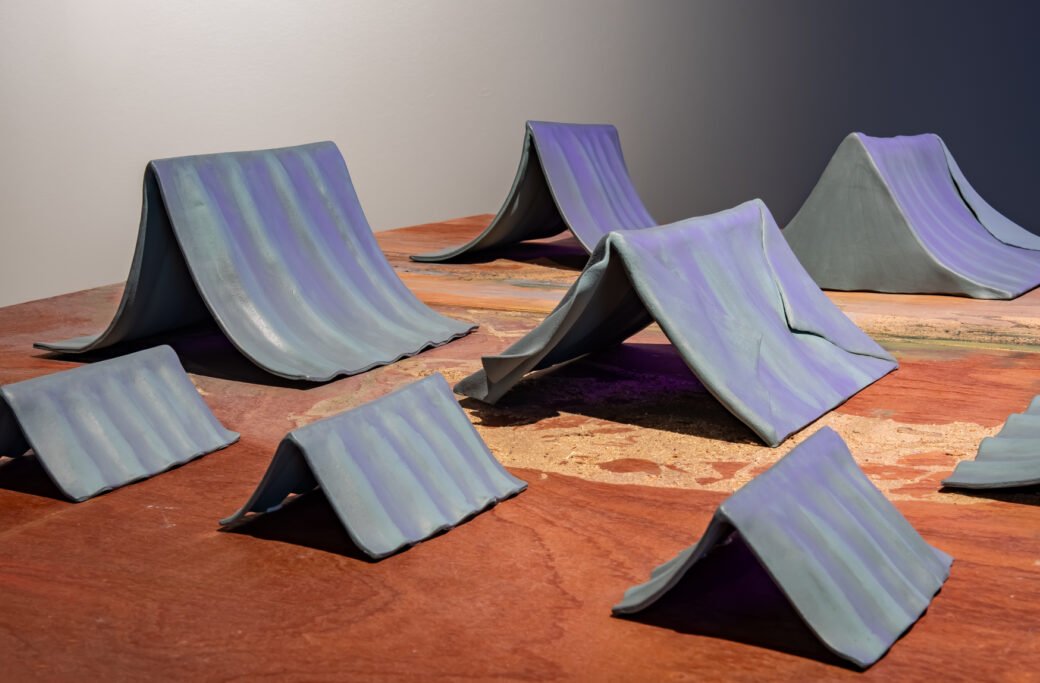
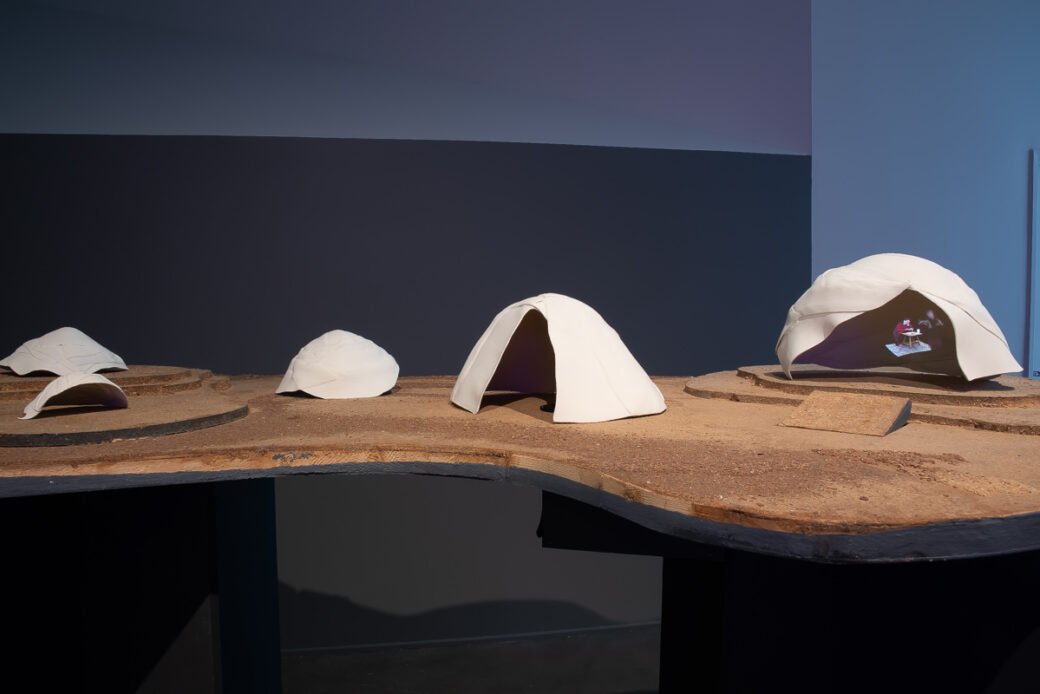
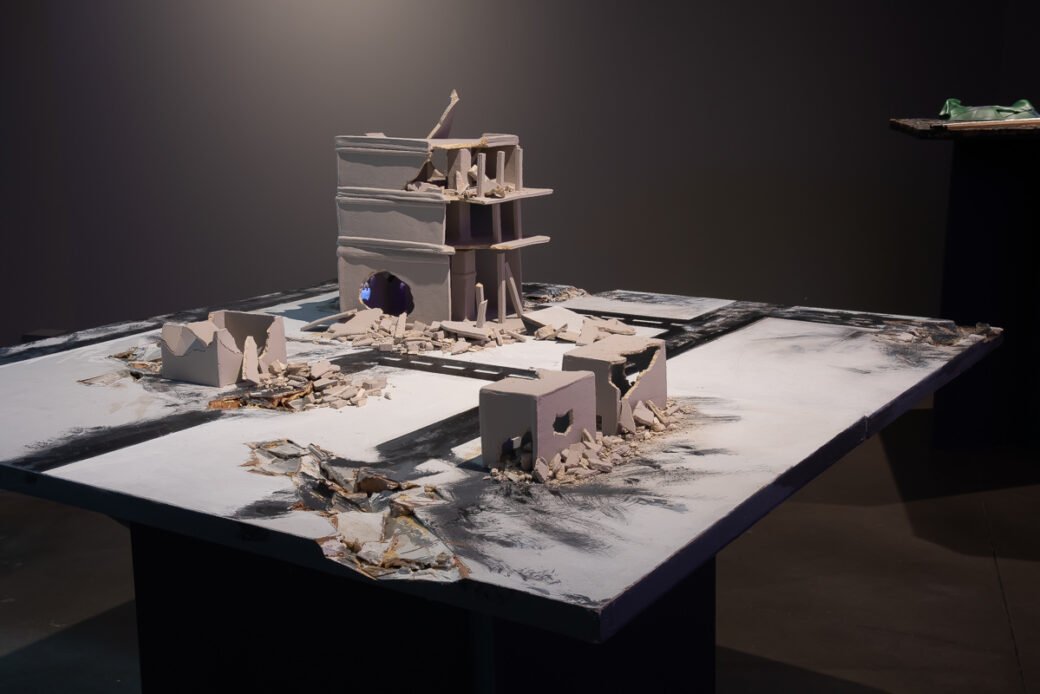
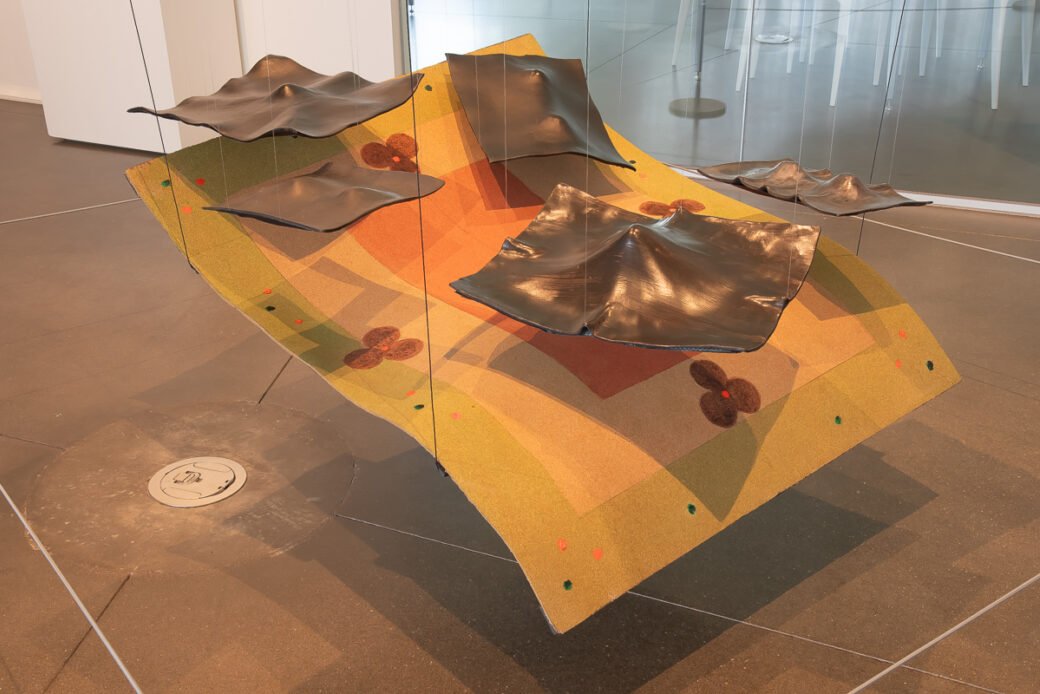
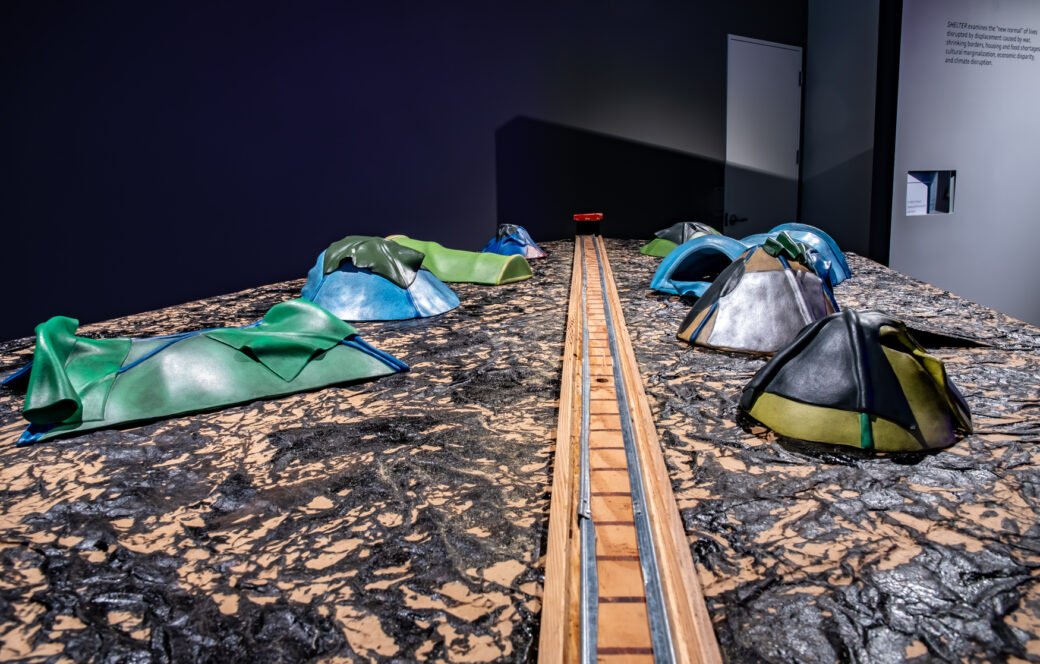
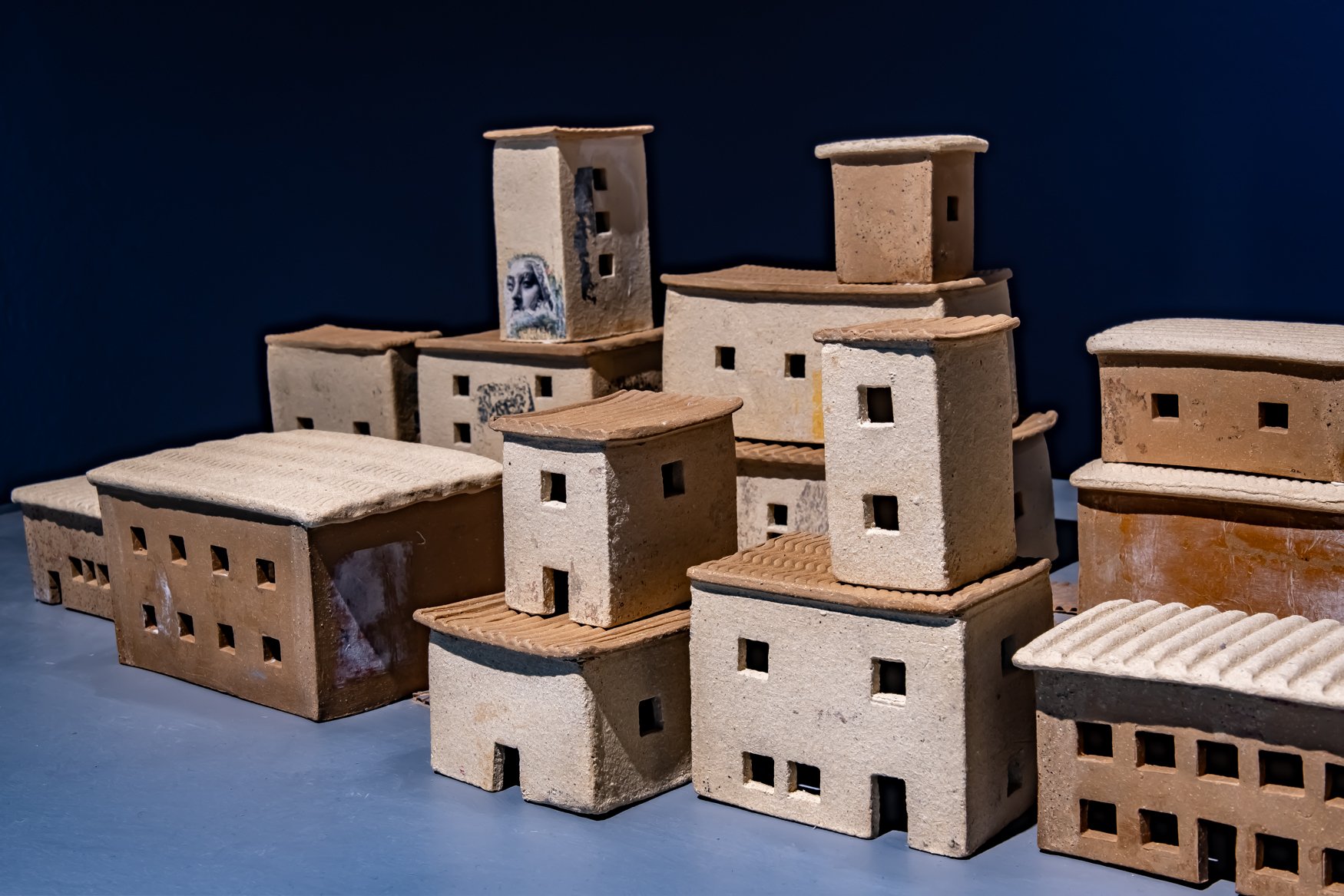
Featuring discrete “Stations” of miniaturized ceramic tents, huts, and buildings, SHELTER comprised regionally specific dwellings inhabited by those seeking refuge in the face of displacement. Each Station contained an embedded audio soundtrack, featuring refugees speaking in their native language or in English, sharing narratives of their memories from home. Intimate video scenarios, portraying individuals and families going about their daily lives, were also projected onto the interior walls of the ceramic forms.
Originally mounted at the Burchfield Penney Art Center in Karrer’s hometown of Buffalo, New York, in 2020–2021, SHELTER illuminated the relationship between the city of Buffalo and its refugee organizations that help displaced peoples to resettle in local communities. Oklahoma Contemporary presented an iteration of the exhibition that was recontextualized for Oklahoma audiences, featuring audio and video recordings of residents in Oklahoma who experienced displacement and who, with generosity of spirit, gave voice to their respective trajectories.
The miniature ceramic structures—hand-built by Karrer in shapes informed by designs of actual shelters—appeared stark white, glazed, textured with stucco, or bearing the imprint of miniature graffiti. They stood whole or bombed out. And through the small windows and doors, one could view individuals or families engaged in quotidian activities—reading, drinking tea, looking after children—that represented the small units of time that build toward eroding what might be alienating or frightening when grappling with dislocation.
They bore witness to their own stories that spoke of loss and sorrows, of struggle and courage, of painful chapters and new beginnings. The invocation of memory captured not only the massive disruption that war, climate disaster, or extreme poverty can trigger but also the source from which refugees draw strength, the roadblocks or hostility they face along the way, and renewed faith in humanity, bolstered by the embrace of welcoming support systems in their new communities.
Karrer designed all the table mounts in collaboration with sculptor Bill Hochhausen, who oversaw their construction. The interviews conducted in Oklahoma were coordinated in partnership with The Spero Project, a local non-profit organization that welcomes resettled refugees in Oklahoma City, along with Asian District Cultural Association, Latino Community Development Agency, and Sooner Hope for Ukraine.