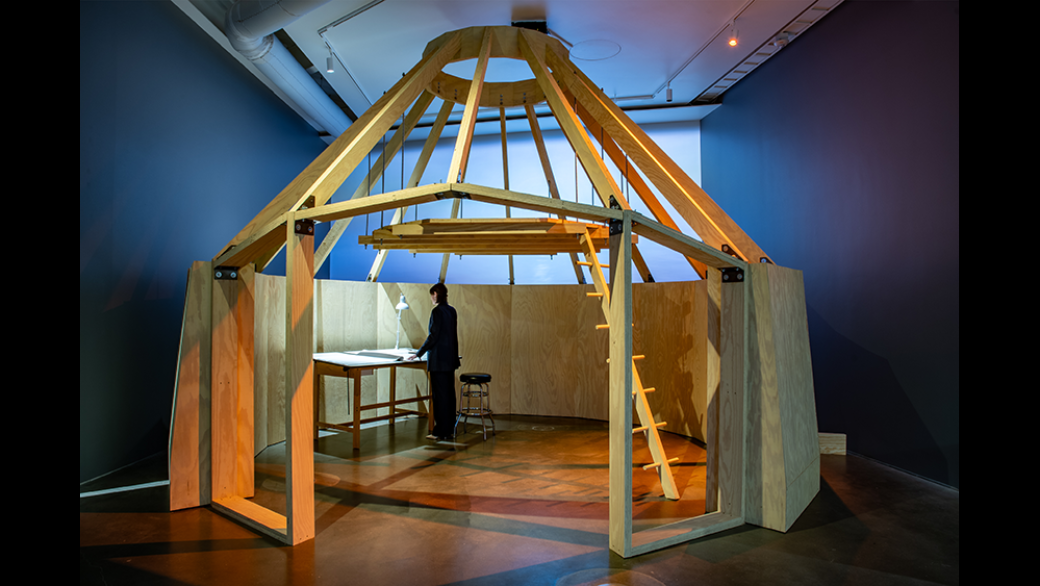
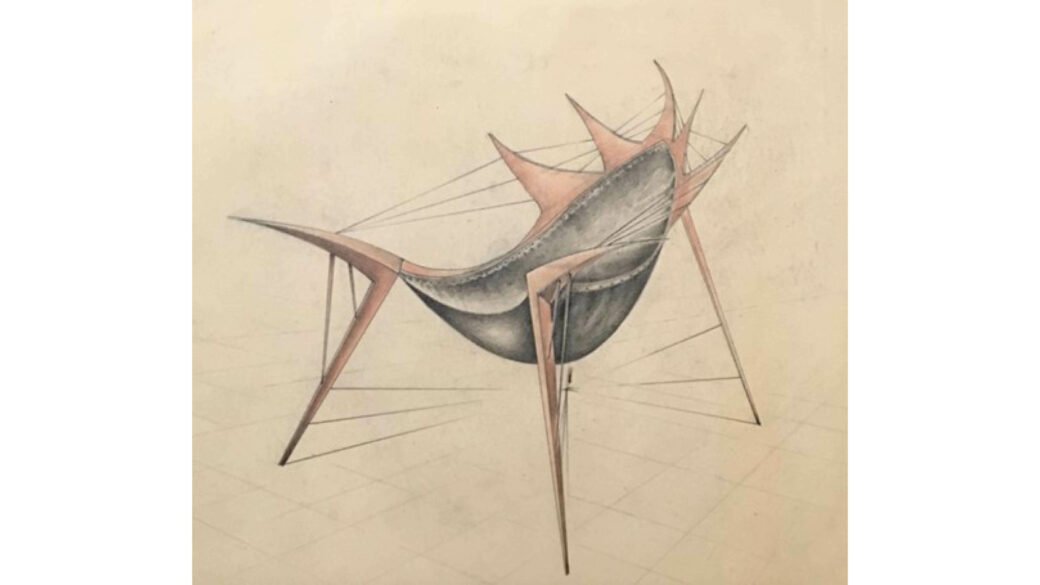
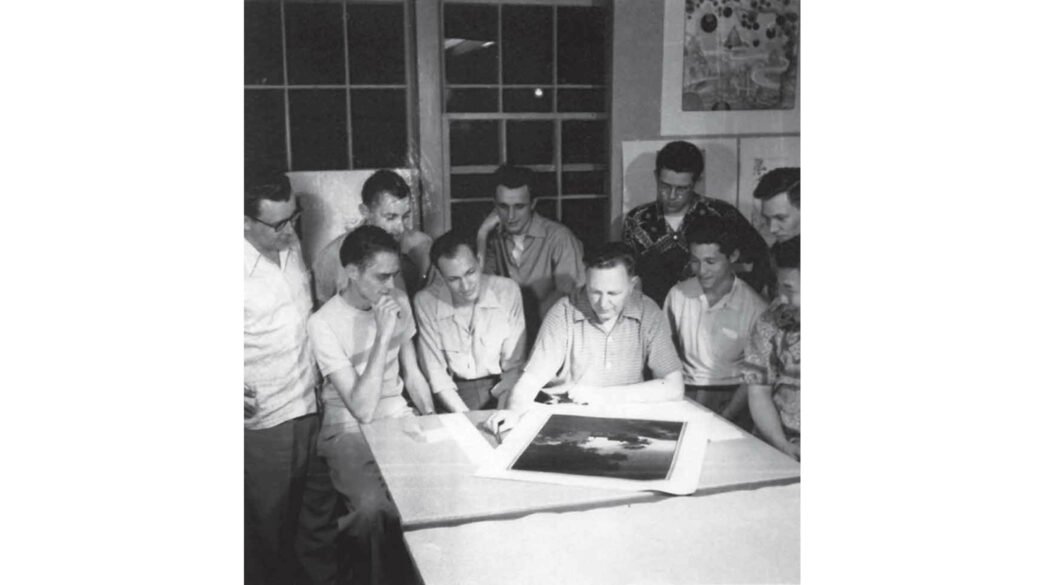
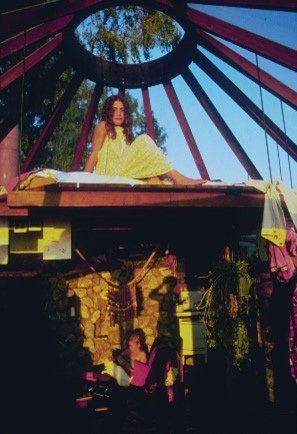
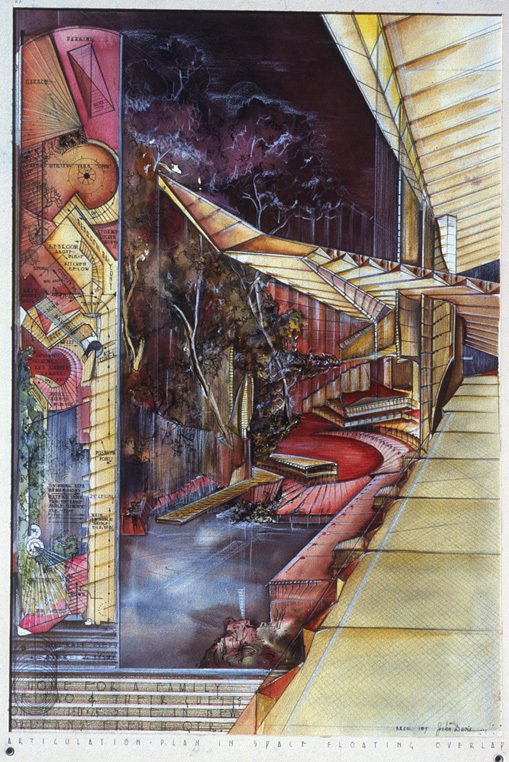
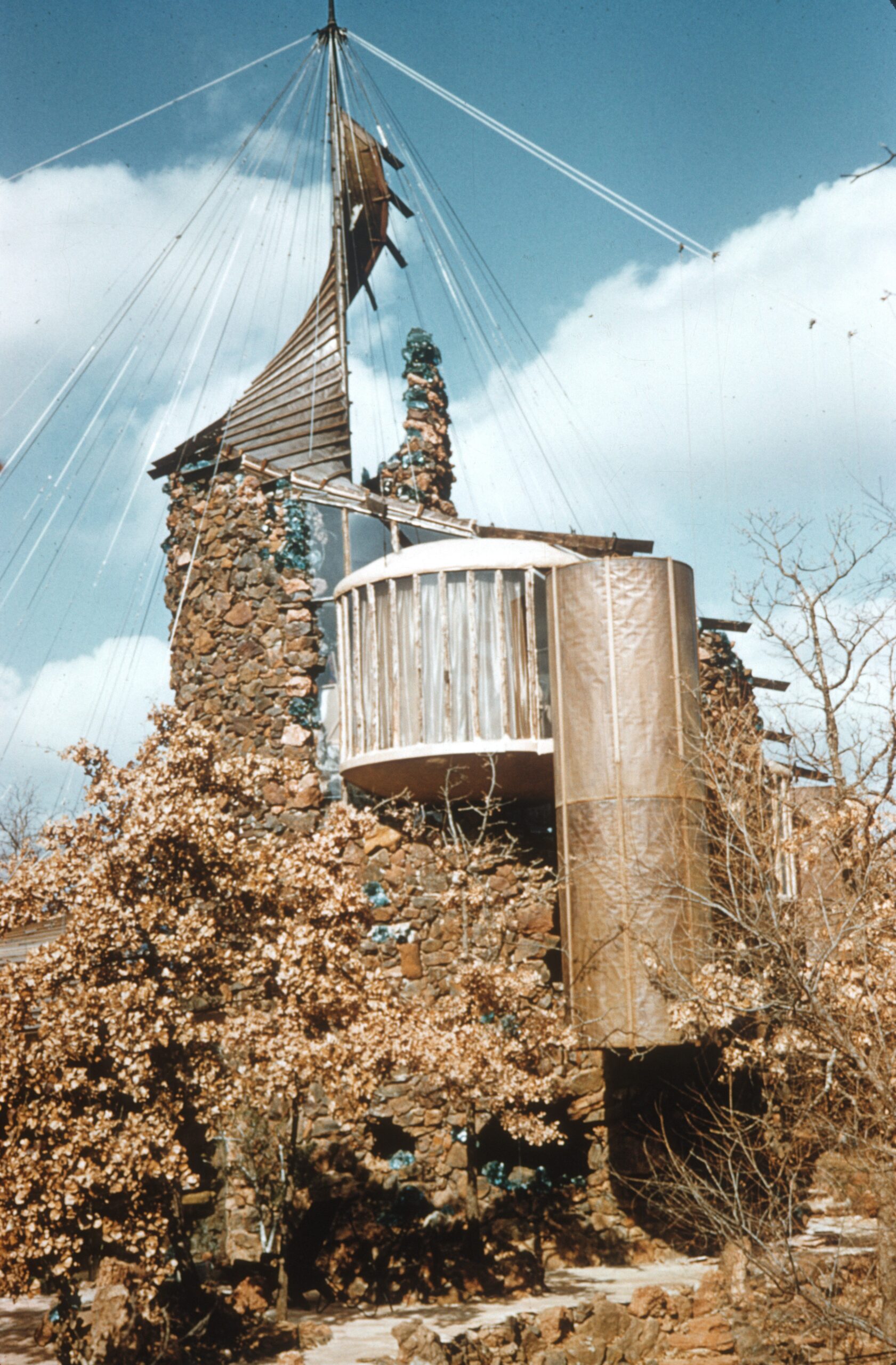
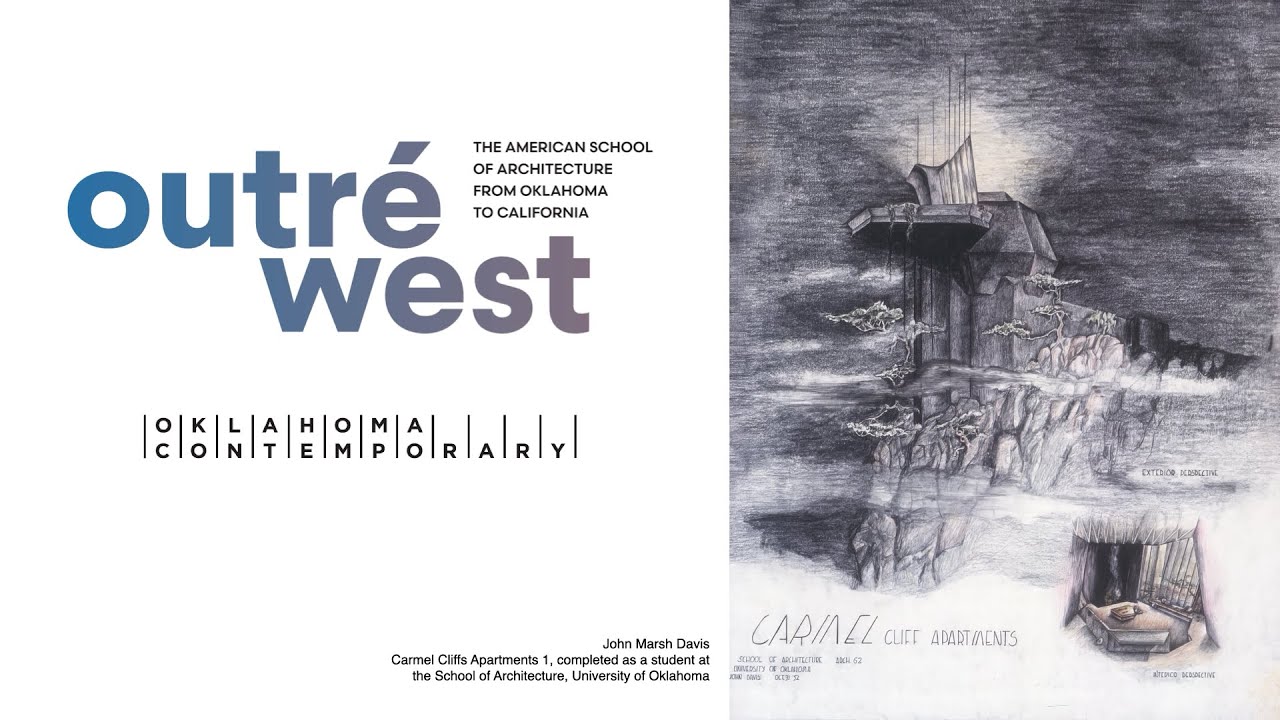
The American School of Architecture emerged from the University of Oklahoma in the postwar period and became known for emphasizing individual creativity and experimentation. Under the guidance of professors like Bruce Goff (1904-82) and Herb Greene (b. 1929), these students were inspired by everyday objects, the natural landscape, and the designs of Native American tribes. While other schools in the United States were heavily influenced by the European Bauhaus and Beaux Arts models, the otherworldly archival drawings featured in Outré West show how students of the American School in Oklahoma transcended the accepted canons of Western architecture.
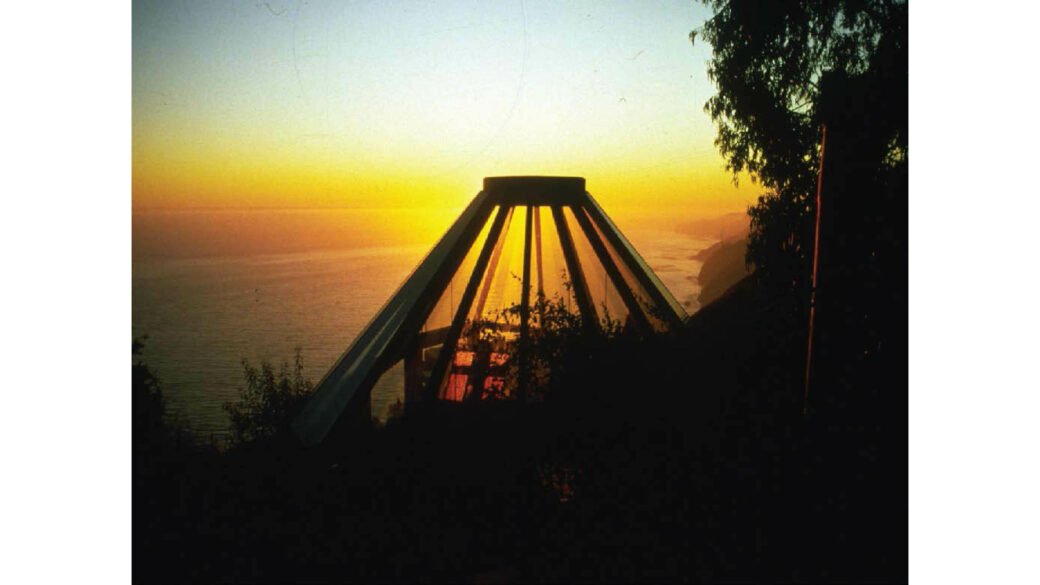
As their careers took off, many American School alumni migrated to California, where they found a cultural openness and booming post-war economy, as well as dramatic landscapes—the ideal testing grounds for their unconventional approaches to design.
Outré West considered the ways in which both Oklahoma and California have attracted ambitious, creative visionaries. Since the 1800s, both places have drawn migrants and transplants from near and far searching for opportunities unfettered by institutional norms and traditions.
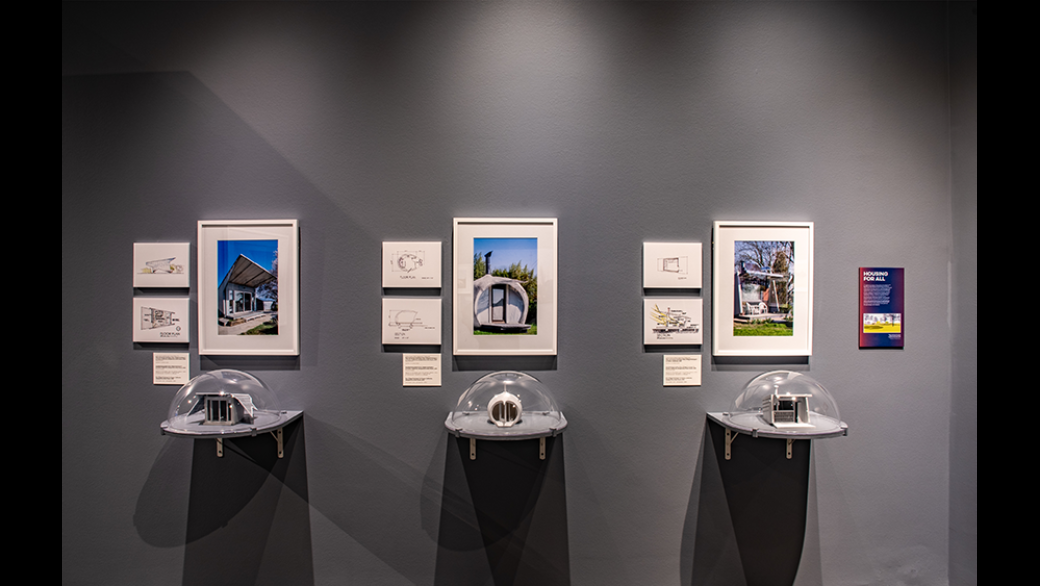
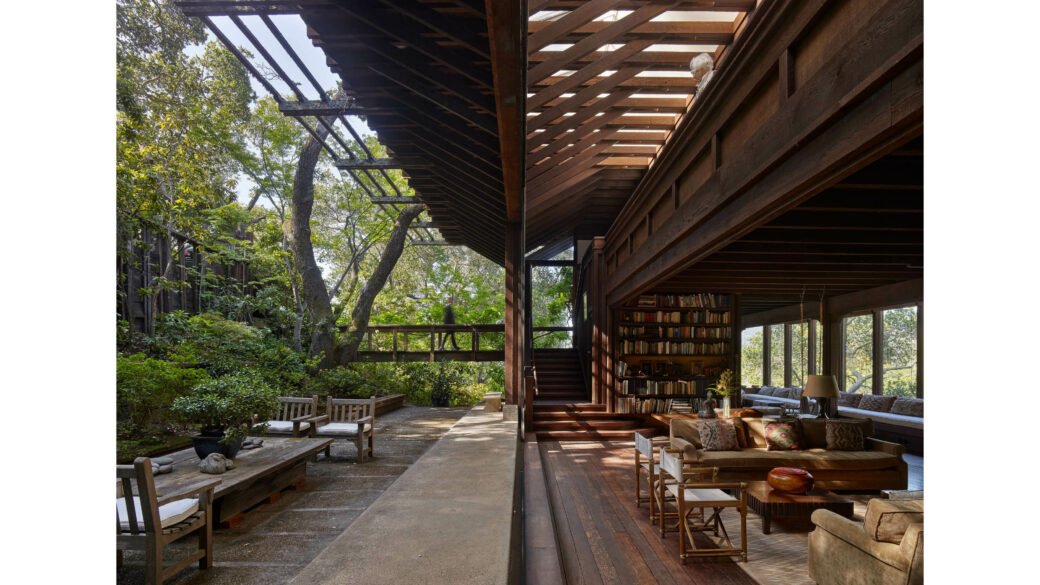
American School architects including Violeta Autumn (1930-2012), John Marsh Davis (1931-2019), Arthur Dyson (b. 1940), Donald MacDonald (b. 1935), and Mickey Muennig (1935-2021) realized hundreds of distinctively built works in California. From museums that exemplify organic architecture and breathtaking multimillion-dollar residences dotting the coast to affordable and prefabricated homes designed to address the housing crisis, these collected works revealed bold—and often stubborn—design talents galvanized in Oklahoma, whose ideas were exported to the West Coast.
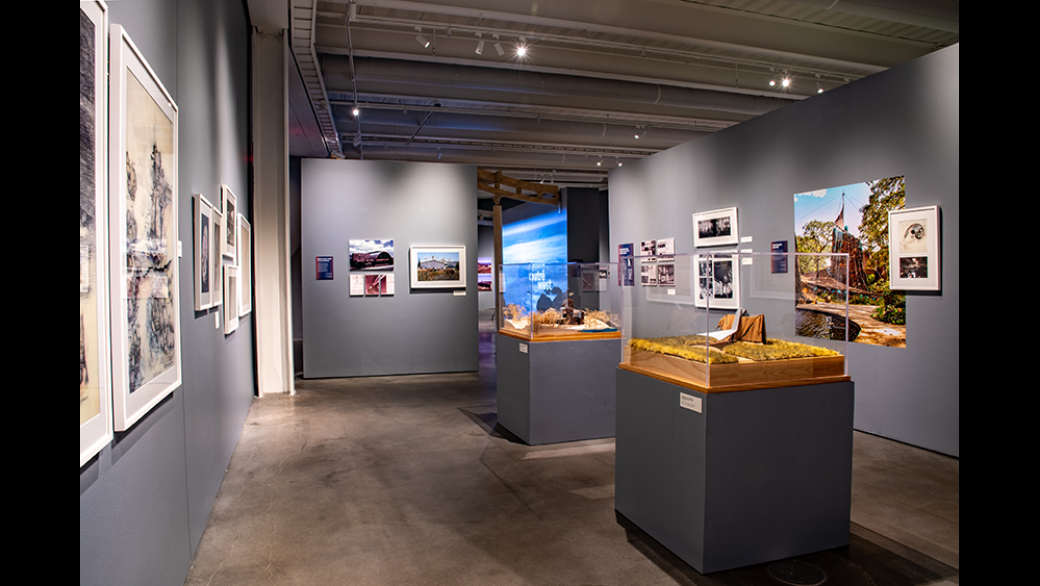
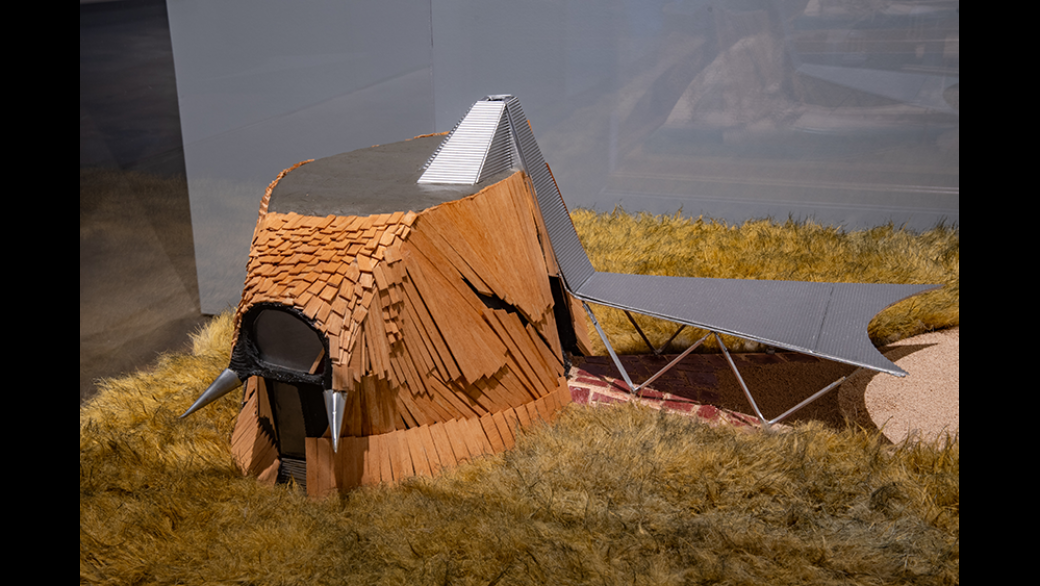
Outré West: The American School of Architecture from Oklahoma to California brought together large-scale photographs, architectural models, and press clippings to showcase these architects and their extraordinary artistic innovations. Bruce Goff characterized the American School as one where faculty strove “to develop at least one school [of architecture] where a creative individual [could] find his sense of direction and grow.” Establishing this teaching approach that encouraged creative diversity and intellectual independence, Goff asserted, “We preach no dogma.” This exhibition illustrated an inspiring story of how the outré—or the iconoclastic—American School education, founded and cultivated in Oklahoma, produced an unexpected kinship between the Oklahoma and California contexts and forged a lasting impact on the architectural imaginary of the American West.
Learn more about the architects